How to import auto parts from China
Importing auto parts from China takes ten steps: specify the parts by OE number, shortlist suppliers, compare quotes like for like, verify the supplier, test samples, place the order on a proforma invoice, inspect before shipment, ship under an agreed Incoterm, clear customs, then check the goods on arrival and reorder.
Updated: November 2026
10 steps, spec to reorder · MOQ 5 pieces per item · T/T 30% deposit, 70% balance before shipment · L/C at sight above USD 20,000 · 18,000㎡ warehouse in China · 20+ countries served
Key takeaways
| Key point | In practice |
|---|---|
| Start with OE numbers | One line per part — OE number, part name, brand, model, year and quantity. The OE number is the only identifier every supplier reads the same way. |
| Minimum order | MOQ is 5 pieces per item at Yunhai, and lines from different brands and categories travel together in one consolidated order. |
| Payment | T/T with a 30% deposit to confirm the order and the 70% balance before shipment; L/C at sight for single orders above USD 20,000. |
| Verify before you pay | Business license, a bank account matching the company name, the product quality grade and packaging requirements — all before any payment. |
| Timeline | A first order takes weeks, not days. Every date in this guide is a working estimate until it is confirmed on your proforma invoice. |
| Inspect before dispatch | Photos of the goods, the packing and the labels, checked against the proforma invoice while the shipment can still be corrected. |
Disclosure: Yunhai Auto Parts is a wholesale auto parts supplier, and this guide is published by a supplier — it explains how buying from a supplier like us works, so you can judge any supplier, including us, by the same steps.
What this guide covers — and what it does not. It covers the buying process end to end: specifying parts, choosing and verifying a supplier, ordering, inspection, shipping and customs clearance in general terms. It does not cover your country's import duty rates, vehicle regulations or tax treatment — those differ by market and change over time, so confirm them with a licensed customs broker in your country before you order. Nothing in this guide is legal, tax or customs advice.
1. The ten steps and a realistic timeline
A typical first order takes weeks, not days. The exact timeline depends on stock, production and shipping, and is confirmed per order. The table below is a working estimate, not a statistic and not a promise — use it to plan, then confirm every date on your proforma invoice.
| Step | What happens | Working estimate (not a statistic) |
|---|---|---|
| 1. Define parts by OE | List every part with its OE number | Hours to a few days |
| 2. Shortlist suppliers | Compare catalogues by OE number and brand | A few days |
| 3. Compare quotes | Same number, same tier, same Incoterm | A few days |
| 4. Verify the supplier | License, bank name, social media and website check | A few days |
| 5. Test samples | Order samples and check fit and quality | Weeks |
| 6. Place the order | Proforma invoice, deposit, production or packing | Weeks |
| 7. Inspect before shipment | Pre-shipment inspection and photos | Days |
| 8. Ship | Freight booked under the agreed Incoterm | Weeks |
| 9. Clear customs | Duties and documents at destination | Days |
| 10. Check and reorder | Check goods on arrival, then reorder | Hours to days |
2. Step 1 — Define the parts by OE number
The OE number is the only identifier every supplier reads the same way. Write one line per part: OE number, part name, brand, model and year, and quantity. Build the list from the vehicle, not from a catalogue photo — the same part name covers different parts across model years, and a brake pad ordered by name alone is a guess that arrives by sea. If you do not have an OE number, send the model, year, engine and a photo of the old part or its label, and mark the line clearly instead of guessing a number: a guessed number earns a confident quote for the wrong part. A clean OE list is also what makes quotes from different suppliers comparable in step 3. At Yunhai, every line is checked by OE number before quoting, and the MOQ is 5 pieces per item.
3. Step 2 — Shortlist suppliers
Shortlist two or three suppliers whose catalogues actually list your OE numbers. Check that they cover your brands — Yunhai lists OE-numbered parts for Chery, Jetour, Changan, BYD, Geely, MG, Dongfeng, Toyota, Nissan, Hyundai, Kia, Isuzu and Great Wall, across filters, brakes, chassis, engine, lighting and body, electrical, steering and new energy parts. Judge the catalogue, not the homepage: a supplier that genuinely stocks or sources your brands can show your OE numbers with photos and fitment notes. Also weigh how the supplier answers technical questions about your models — a seller who cannot discuss fitment will not catch a wrong line later, when catching it is expensive. If a supplier's catalog doesn't list your OE number, ask them to check whether they can supply it before ruling them out — some parts aren't listed but can be sourced after a factory check.
4. Step 3 — Compare quotes like for like
Ask every supplier for a quote on the same list, then compare like for like: the same OE number, the same tier (genuine, OE-supplier or quality aftermarket), the same Incoterm, the same packing, and the same completeness. A quote that leaves out freight, packing or the tier is not comparable. Put the quotes side by side in a table of your own — part number, tier, unit price, packing, Incoterm, and what each quote leaves out. The cheapest line is often simply the one missing freight, export packing or the tier you asked for, and a quote far below the others on the same number and tier deserves a question about what is different before it is treated as a bargain. Ask for the quote in writing, with part numbers, quantities, tier, Incoterm, payment terms and packing stated.
5. Step 4 — Verify the supplier
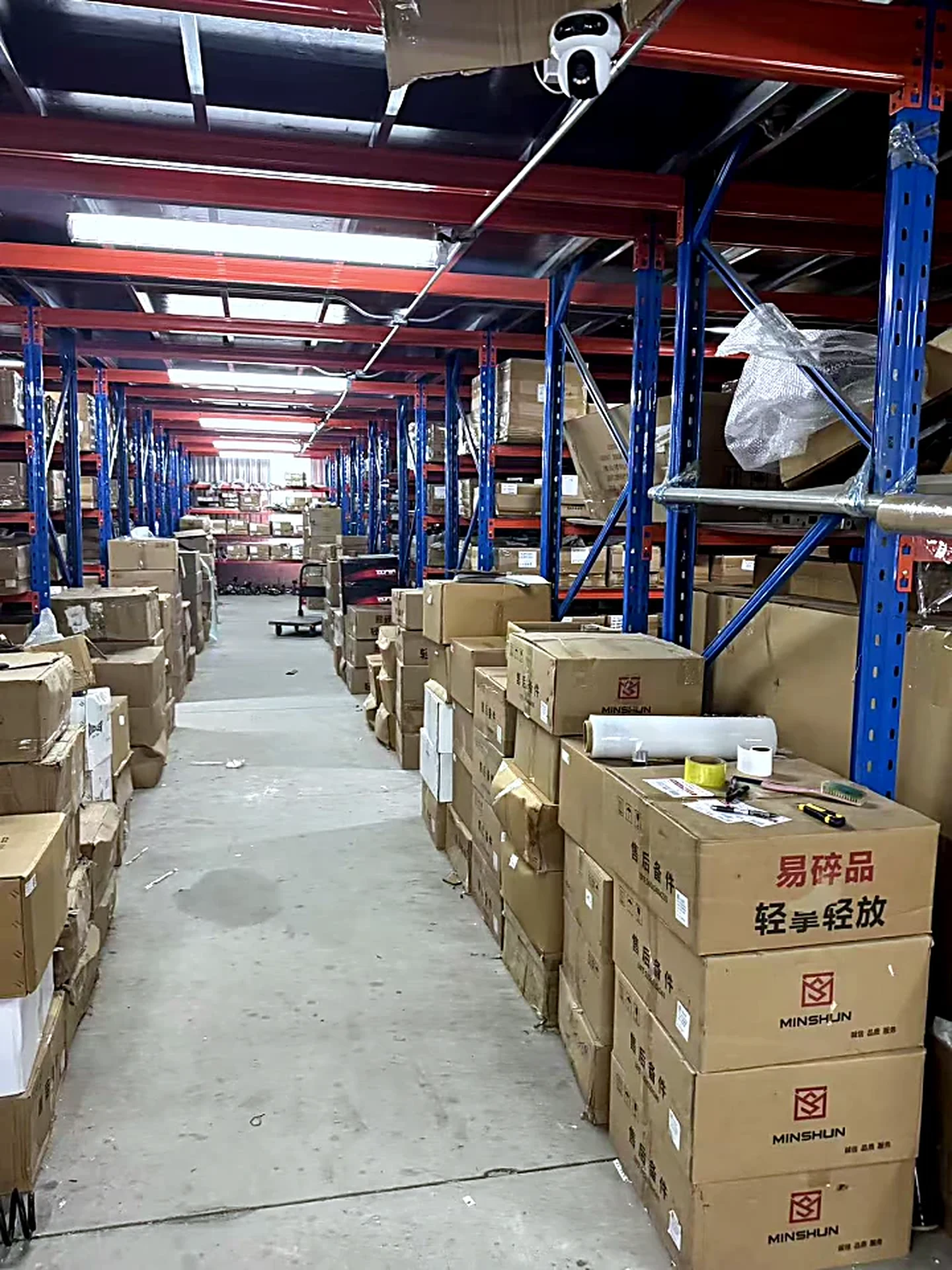
Before you pay anything, verify the supplier. Ask for the business license, confirm the bank account name matches the company name, and check the supplier on its social media and website — look for real warehouse photos and product videos. These checks take days, not weeks, and they cost nothing — do them before samples, because a sample from an unverified seller proves only that one part exists. Yunhai was founded in 2016, has 30 employees, an 18,000㎡ warehouse in China, serves 20+ countries and works with 10+ partner factories. Our guide on how to verify a Chinese auto parts supplier runs through the checks in order, including the warning signs that should stop an order.
6. Step 5 — Test samples
Order samples before a full order, and test fit and quality on the real vehicle. Test the sample the way your customers will: fit it to the actual vehicle, compare it against the part it replaces, and check the label and the packing you will receive in bulk. Keep the approved sample on your shelf — it is your reference if a later shipment is ever disputed. Some products offer free samples; the buyer covers air freight, and sample orders are paid 100% in advance. A sample that fits and matches the agreed tier is the cheapest insurance a first order can have. If the sample is wrong, you have learned it before the bulk order, not after.
7. Step 6 — Place the order on a proforma invoice
Place the order on a proforma invoice (PI) that states the part numbers, quantities, tier, Incoterm, payment terms and packing. Read it line by line before paying the deposit: part numbers and quantities against your list, the tier on every line, the Incoterm with its named port or place, and the packing standard. Anything agreed in chat but missing from the invoice is not agreed. Keep the confirmed invoice — every later step is checked against it, from the inspection in step 7 to the arrival check in step 10. At Yunhai the terms are: T/T 30% deposit to confirm the order, 70% balance before shipment; an irrevocable letter of credit at sight is accepted for single orders above USD 20,000; sample orders are paid 100% in advance. Exact terms are confirmed in writing on the proforma invoice before payment.
8. Step 7 — Production and inspection before shipment
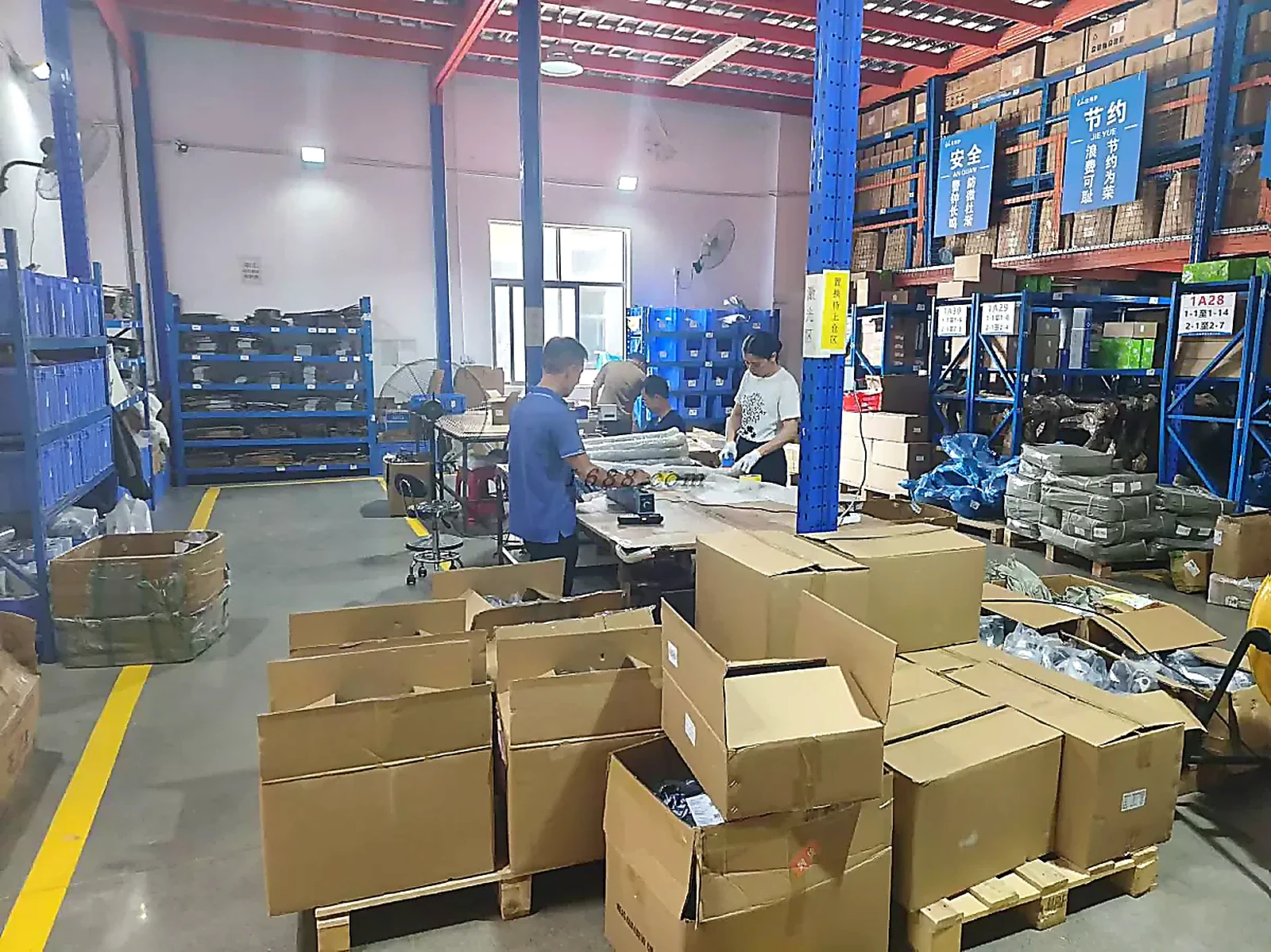
For in-stock orders, packing is completed within 12 hours after payment and part details are confirmed. Ask for a pre-shipment inspection: photos of the goods, the packing and the labels before the cargo leaves. You can inspect in person, send someone, or work from dated photos and video — what matters is that the goods are checked while they can still be corrected. Count the cartons against the packing list and match the part numbers on a sample of labels against the proforma invoice. If anything does not match, fix it before dispatch, not after arrival.
9. Step 8 — Ship under an agreed Incoterm
Ship under the Incoterm agreed on the proforma invoice. Choose the mode by weight, volume and urgency, not by habit: sea freight is cheapest for heavy or bulky parts and for the bulk of a consolidated order; air or express is fastest for a small urgent line that is holding up a workshop. Mixed consolidated orders are welcome, so small lines can travel together in one shipment. Agree who books the freight and who insures the cargo, and write both on the invoice — the ICC's Incoterms® rules, linked in the sources at the end of this guide, are the official reference for what each term assigns to buyer and seller. Freight and transit time are quoted per order. In-stock orders are dispatched within 24 hours — dispatch means the goods leave the facility.
10. Step 9 — Clear customs and pay duties
Customs duties depend on the destination country's tariff schedule, and the buyer should confirm them with a licensed customs broker before ordering. Your broker classifies the goods under the Harmonized System (HS) codes your country applies, and the duty rate follows the classification — so a wrong code costs money in both directions: duty overpaid, or a reassessment later. Have the commercial invoice, packing list and bill of lading or air waybill ready, with the part numbers, quantities and values matching the proforma invoice and each other; mismatched documents are the most common cause of avoidable delay at clearance. Keep the supplier's contact ready in case customs asks for a document.
11. Step 10 — Receive, check, claim, reorder
On arrival, check the goods against the proforma invoice: part numbers, quantities, tier and condition. Open a sample of cartons on arrival, not weeks later — count against the packing list, check the part numbers against the invoice, and fit one piece from each line before the stock goes on the shelf. Photograph any damage or shortage the same day and tell the supplier at once: a claim can only be handled while the facts are fresh. If the order is right, reorder the fast movers early, while the first shipment is still selling — a second order on the same OE list is faster than the first, because the parts, the tier and the terms are already confirmed, and steps 2 to 5 are already done.
12. Before you start — what to have ready
Three things make every step above faster. The first is the parts list itself, in a file you can send as-is — a spreadsheet or a plain list with one line per part, as step 1 describes; a list that has to be retyped from photos of handwriting produces errors no inspection catches later. The second is your destination: the port or city the goods are going to, so freight can be quoted against a real route and the Incoterm can name a real place. The third is a licensed customs broker in your own market, spoken to before the first order rather than after the first ship sails — the broker confirms your duty rates and the documents your customs will ask for, and that conversation costs little compared with a shipment waiting at the port. None of this needs to be formal: a clean list, a named destination and a broker's phone number are enough to start.
13. The documents you will handle
Five documents carry an order from quotation to clearance. You issue none of them yourself except the order, but you check all of them: the same part numbers, quantities and values must appear on each one, because customs and your broker work from these papers, not from your chat history. When a document disagrees with the proforma invoice, the time to catch it is when it is issued — not at the port.
| Document | Issued by | What to check on it |
|---|---|---|
| Proforma invoice | The supplier | Part numbers, quantities, tier, Incoterm, payment terms and packing — everything agreed, in writing, before you pay |
| Commercial invoice | The supplier | Values and part descriptions match the proforma invoice and the goods themselves |
| Packing list | The supplier | Cartons, weights and quantities match the commercial invoice and what was inspected before dispatch |
| Bill of lading / air waybill | The carrier or forwarder | Consignee name, destination port and shipping marks match your other documents |
| Customs declaration | Your broker, at destination | HS codes and declared values match the commercial invoice |
14. Document checklist — what to have ready
Keep these documents together for every shipment: the supplier issues most of them, your broker files the declaration from them, and your destination's customs works from the same set. Which of them your destination requires, and in what form, is a question for your broker — confirm with your customs broker which of these your destination requires before the goods leave.
| Document | What it is |
|---|---|
| Proforma invoice | The supplier's written offer the order is placed on: part numbers, quantities, tier, Incoterm, payment terms and packing. |
| Commercial invoice | The supplier's invoice for the shipped goods, carrying the values your customs assesses duty and tax from. |
| Packing list | Cartons, weights and quantities for the shipment, matching the commercial invoice. |
| Bill of lading / air waybill | The carrier's transport document — a bill of lading for sea freight, an air waybill for air freight. |
| Certificate of origin | States where the goods were made; some destinations ask for it at clearance. |
| Insurance certificate | Evidence of the cargo insurance cover agreed together with the freight, where insurance is arranged. |
15. What an order costs besides the parts
The part price is only one line of the landed cost. What else you pay depends mainly on the Incoterm: under EXW almost everything after the supplier's door is yours; under CIF the seller covers freight and insurance to your port; under DAP the goods are delivered to your place with import clearance still yours. None of these items has a standard figure — each is quoted per order, per route and per season — which is why this guide names the cost items instead of inventing numbers for them. Ask where each item sits before you compare two quotes. Yunhai can also deliver to your door: door-to-door delivery is available, arranged under the Incoterm agreed for your order.
| Cost item | Who charges it | When it is settled |
|---|---|---|
| The parts | Your supplier | On the proforma invoice, before packing starts |
| China inland freight | Set by the Incoterm — the buyer pays under EXW, the supplier includes it under FOB | Quoted per order before dispatch |
| Export packing | Your supplier | Stated on the proforma invoice with the packing standard |
| Export customs declaration | Depends on the Incoterm — usually your supplier or a customs broker (under EXW, the buyer) | Before export |
| Inspection | A third-party inspector, or your supplier's own pre-shipment check — only where an inspection is required | Not a charge on every order: it arises only for goods that need inspection, before dispatch |
| International freight | Carrier or forwarder | Quoted per order before dispatch, under the agreed Incoterm |
| Cargo insurance | Insurer or forwarder | Agreed together with the freight, before dispatch |
| Import duties and taxes | Your country's customs | At clearance, assessed from the classification and the declared value |
| Port, broker and local delivery charges | Port, broker and local carrier | At arrival, per your broker's statement |
16. Landed cost — a worked example
Worked example (illustration only, not a quote): goods value USD 5,000, domestic transport USD 100, sea freight USD 800, export declaration USD 50, destination clearance USD 150 — USD 6,100 before duty and tax. At illustrative rates of 5% import duty and 5% VAT: duty 5% of USD 6,100 = USD 305; VAT 5% of (USD 6,100 + USD 305 = USD 6,405) = USD 320; illustrative landed cost ≈ USD 6,725 before local transport. Real duty and tax rates, and what they apply to, differ by destination country — confirm them with your customs broker. Freight, duty and tax are quoted per order; no standard figures exist.
| Line | Amount (USD) |
|---|---|
| Goods value | 5,000 |
| Domestic transport | 100 |
| Sea freight | 800 |
| Export declaration | 50 |
| Destination clearance | 150 |
| Subtotal before duty and tax | 6,100 |
| Import duty at an illustrative 5% of 6,100 | 305 |
| VAT at an illustrative 5% of (6,100 + duty) | 320 |
| Illustrative landed cost, before local transport | ≈ 6,725 |
17. Mistakes that cost first-time importers money
The expensive mistakes are rarely about the parts themselves. Ordering by part name is the first: a name covers hundreds of OE numbers across years and versions, and a name-only order is a guess. Comparing quotes that were never like for like is the second — different tiers, different Incoterms, one with freight included and one without — and then choosing the lowest number. Paying a deposit before the proforma invoice states the terms is the third: once money has moved, adding a missing term becomes a negotiation instead of administration. Skipping the sample and the pre-shipment inspection to save a week is the fourth, and it is how a fitment problem gets discovered with a shipment already cleared. Treating customs as an afterthought is the fifth: duties follow the HS classification of your goods, and a broker consulted after the ship sails can only work with the documents that already exist. Every one of these is avoided by the same habits — the OE list first, everything in writing, and the goods checked before they leave, not after they arrive.
Frequently asked questions
- What is the first step to import auto parts from China?
- Specify the parts by OE number — one line per part with the OE number, part name, brand, model and year, and quantity. The OE number is the only identifier every supplier reads the same way.
- What is the MOQ for a first order?
- At Yunhai the MOQ is 5 pieces per item, and mixed consolidated orders are welcome. The exact MOQ is confirmed against each inquiry.
- How do I pay for a first order?
- By T/T: 30% deposit to confirm the order and the 70% balance before shipment. Exact terms are confirmed in writing on the proforma invoice before payment.
- Should I order samples first?
- Yes for a first order. Some products offer free samples; the buyer covers air freight, and sample orders are paid 100% in advance.
- How long does a first order take?
- A typical first order takes weeks, not days. The exact timeline depends on stock, production and shipping, and is confirmed per order.
- What should the proforma invoice state?
- Part numbers, quantities, tier, Incoterm, payment terms and packing. Do not pay until all of them are confirmed in writing.
- Which documents do I need to clear customs?
- The commercial invoice, the packing list and the bill of lading or air waybill, with part numbers, quantities and values matching the proforma invoice. Your customs broker files the declaration from these and classifies the goods under the HS codes your country applies — confirm the list with your broker before the shipment leaves.
- Who pays the import duties?
- Under the Incoterms most auto parts orders use — EXW, FOB, CIF and DAP — import duties and taxes at destination are the buyer's, assessed by your customs from the classification and declared value. The exact split follows the Incoterm agreed on your proforma invoice.
- How much does it cost to import auto parts from China?
- There is no fixed cost. The total is the goods, plus domestic transport and freight, plus export declaration and destination clearance, plus your destination's import duty and VAT, plus local transport — the worked example in this guide runs one set of illustrative figures end to end. Every figure is quoted per order, and duty and tax rates differ by destination, so confirm them with your customs broker.
- What documents do I need to import auto parts?
- The document checklist in this guide: proforma invoice, commercial invoice, packing list, bill of lading or air waybill, certificate of origin, and the insurance certificate. Confirm with your customs broker which of these your destination requires.
- Do I need a conformity certificate to import auto parts?
- Some destinations require conformity certificates for regulated parts — safety-critical parts are the common example. The importer usually applies for them, using test reports supplied by the seller. Confirm the requirement for your exact part and destination with your customs broker before shipping.
- Is buying auto parts from China reliable?
- Reliable — if you verify step by step: business license, a bank account name matching the license, check the supplier on its social media and website, samples and pre-shipment inspection. Skip these steps and the risk is high.
- What is the difference between neutral packing and supplier-branded packing?
- Neutral packing is a plain carton or box with no supplier branding or logo on it — nothing on the outside shows where the parts came from, which suits buyers who do not want their end customers to see the supply source. Supplier-branded packing is the supplier's own box, printed with its brand and product markings, so the source is visible on every carton. Neither is automatically better: choose by how you sell. If your customers should not see the supplier's name, ask for neutral packing; if the supplier's brand carries weight in your market, keep the branded box. Whichever you choose, have it stated on the proforma invoice before packing starts.
Official sources
- International Chamber of Commerce (ICC) — Incoterms® rules — The official source for the trade terms in step 8: who pays the freight, who handles export and import, and where the risk passes from seller to buyer.
- General Administration of Customs of China — Service Guide (English) — China's customs authority publishes its service guides — enterprise administration, customs clearance administration and more — on its official English site. Your own country's customs authority publishes the import side of the same procedures.